
Feeling tired all the time? 😴 Notice your energy levels aren't what they used to be? You're not alone. Millions of people struggle with chronic fatigue and the inevitable signs of aging, but what if the key to reversing these issues lies deep within our cells? 🔬
The powerhouses of our cells: mitochondria: may hold the secret to unlocking sustained energy and slowing the aging process. Recent groundbreaking research from leading scientists and natural health practitioners reveals that supporting mitochondrial health could be the missing piece in your wellness puzzle. ⚡
Understanding Your Cellular Power Plants 🏭
Mitochondria are often called the "powerhouses of the cell" for good reason. These tiny organelles are responsible for producing adenosine triphosphate (ATP), the energy currency that powers every function in your body: from thinking and moving to healing and detoxification. 💪
But here's the concerning reality: your ATP-producing capacity decreases by approximately 8% per decade as you age, according to research published in leading scientific journals. Additionally, mitochondrial density in your skeletal muscle gradually declines with age, meaning you literally have fewer energy factories working for you. 📉
Leading researchers in mitochondrial medicine, explains that this decline isn't just about feeling tired: it's about your body's fundamental ability to repair, regenerate, and maintain optimal function at the cellular level.
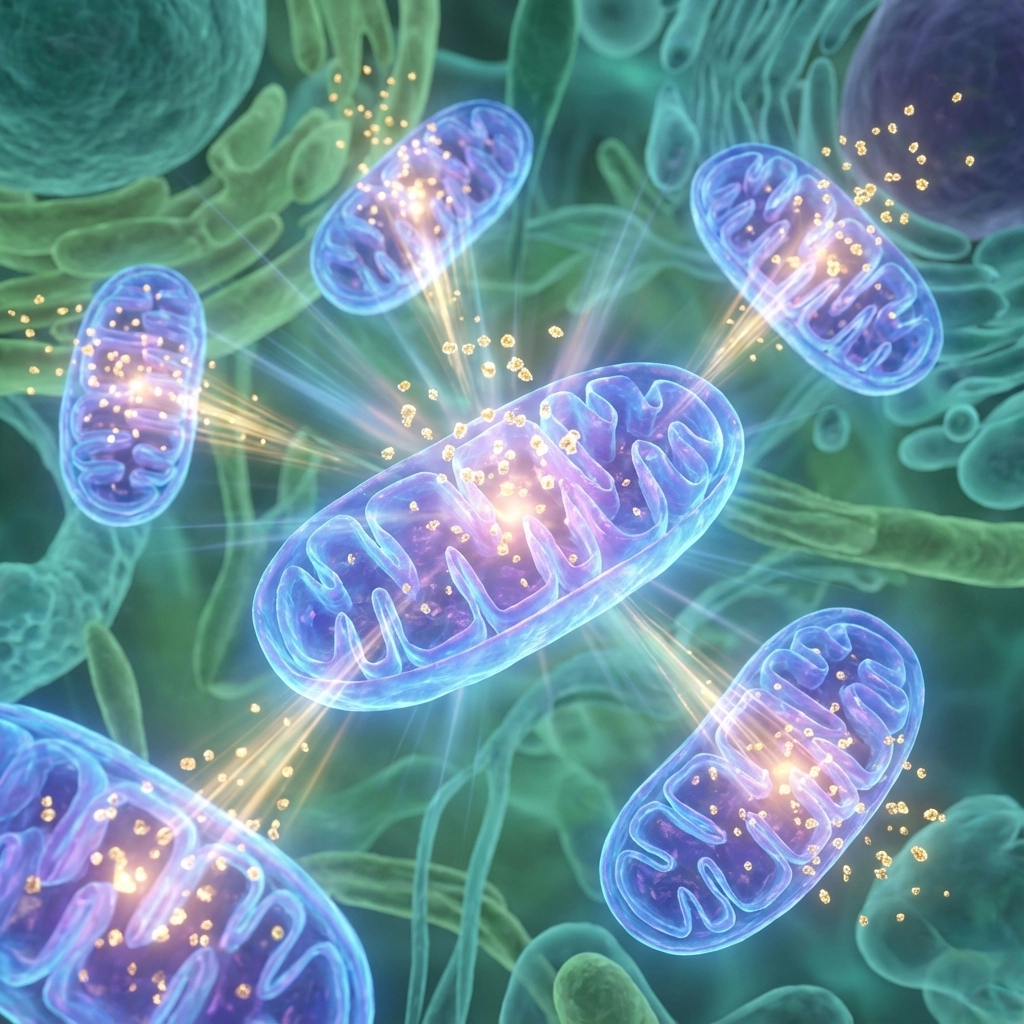
The Vicious Cycle of Mitochondrial Decline 🌀
Understanding why mitochondria age helps us understand how to support them. The process involves a complex cascade that researchers have been unraveling:
Oxidative Stress Overload 🔥
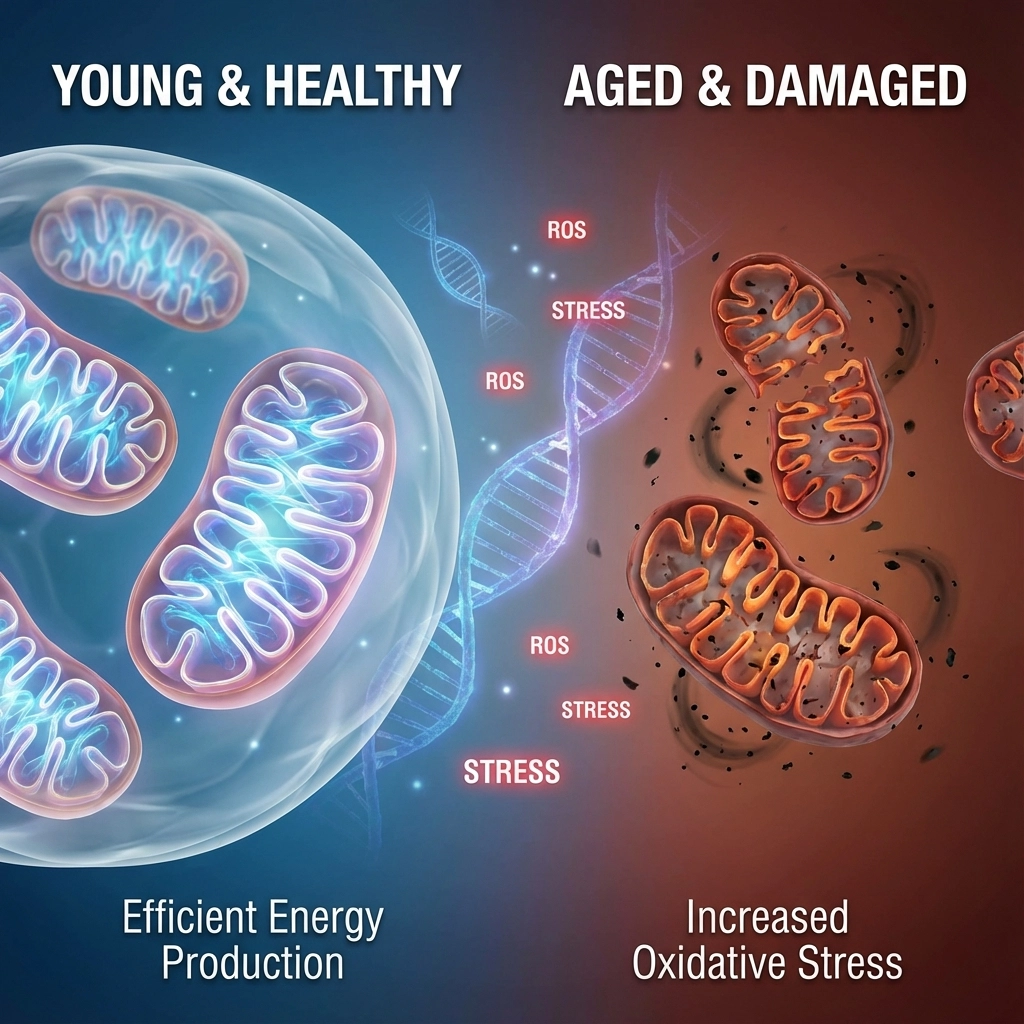
As mitochondria work to produce energy, they naturally create reactive oxygen species (ROS) as byproducts. Think of it like exhaust from a car engine. When you're young, your body has robust antioxidant defenses to neutralize this "exhaust." But as you age, ROS production increases while your antioxidant defenses weaken, creating what scientists call oxidative stress.
DNA Damage Accumulation 🧬
This oxidative stress directly damages mitochondrial DNA (mtDNA), leading to mutations that further impair mitochondrial function. It's a vicious cycle: damaged mitochondria produce more ROS, which causes more damage, which leads to even more dysfunction. Stay tuned... the good news is coming...
Quality Control Breakdown 🔧
Your cells have sophisticated quality control mechanisms to remove damaged mitochondria (called mitophagy) and create new ones (mitochondrial biogenesis). With age, both processes become less efficient, meaning damaged mitochondria stick around while fewer healthy ones are produced.
The Surprising Hypermetabolism Discovery 🚨
Recent groundbreaking research from Columbia University has uncovered an unexpected mechanism that helps explain why fatigue and aging accelerate together. When mitochondria become impaired, cells don't conserve energy as you might expect. Instead, they enter a state called hypermetabolism, doubling their energy expenditure. 😲
This discovery reveals that cells with damaged mitochondria actually burn through energy at twice the normal rate. While this provides short-term survival benefits by maintaining essential functions like protein synthesis, it comes at a severe cost: accelerated biological aging.
The mechanism works like this: when cells are spending excessive energy on immediate survival, they can't allocate resources to long-term maintenance processes like telomere preservation. This energetic trade-off results in faster cellular aging, increased inflammation, and the fatigue you feel as your body restricts physical activity to compensate. 🏃♂️➡️🚶♂️
Natural Strategies to Revitalize Your Mitochondria 🌿
The good news? You have more control over your mitochondrial health than you might think. Leading researchers and natural health practitioners have identified several evidence-based strategies you can implement starting today:
1. Strategic Exercise Training 🏋️♀️
Physical exercise consistently emerges as the most powerful intervention for mitochondrial health. But it's not just about moving more: it's about moving smarter.
What the research shows: Regular physical training can delay mitochondrial aging and improve energy production efficiency. When researchers control for physical activity levels, many age-related declines in mitochondrial function disappear entirely.
Your action plan:
- Incorporate both aerobic exercise and resistance training
- Aim for 150 minutes of moderate activity weekly, plus 2 days of strength training
- Consider high-intensity interval training (HIIT) 2-3 times per week
- Start slowly and build gradually: consistency beats intensity
2. Optimize Your Eating Patterns 🍽️
Your mitochondria respond powerfully to how and when you eat. Research from leading institutions shows that caloric restriction and intermittent fasting can significantly improve mitochondrial efficiency.
The science: Caloric restriction activates cellular pathways (like mTOR downregulation) that enhance mitochondrial function and reduce metabolic stress. This doesn't mean starving yourself: it means being strategic about when and how much you eat.
Practical applications:
- Try intermittent fasting (start with 12-14 hours between dinner and breakfast)
- Focus on nutrient-dense, whole foods
- Reduce processed foods and excess sugar
- Consider a Mediterranean-style diet rich in antioxidants
3. Support Mitochondrial Biogenesis 🧪
PGC-1α is a key regulator that tells your body to create new mitochondria. Research shows its levels decline with age, but you can naturally boost it.
Natural PGC-1α boosters:
- Cold exposure: Cold showers or ice baths activate this pathway
- Fasting: Even short fasts can stimulate mitochondrial biogenesis
- Specific nutrients: CoQ10, NAD+ precursors, and B-vitamins support the process
- Resveratrol: Found in red grapes and berries, this compound mimics caloric restriction benefits
4. Prioritize Sleep and Stress Management 😴
Your mitochondria repair and regenerate during sleep. Chronic stress and poor sleep create a double hit: increased oxidative stress plus reduced recovery time.
Sleep optimization:
- Aim for 7-9 hours nightly
- Keep your bedroom cool and dark
- Establish a consistent sleep schedule
- Limit blue light (cell phone) exposure 2 hours before bed
Stress management techniques:
- Regular meditation or mindfulness practice
- Deep breathing exercises
- Yoga or tai chi
- Time in nature

5. Strategic Supplementation 💊
While a healthy lifestyle is foundation, specific supplements can provide targeted mitochondrial support based on scientific research:
Evidence-based options:
- CoQ10 (100-300mg daily): Essential for mitochondrial energy production
- NAD+ precursors: Support cellular energy metabolism
- Alpha-lipoic acid: Powerful antioxidant that regenerates other antioxidants
- Magnesium: Cofactor for over 300 enzymatic reactions, including ATP production
- B-complex vitamins: Essential for energy metabolism
Always consult with a healthcare provider before starting new supplements.
Environmental Factors That Matter 🌍
Your mitochondria are constantly responding to environmental inputs. Minimizing toxin exposure while maximizing supportive factors can make a significant difference:
Reduce mitochondrial stressors:
- Limit exposure to pesticides and processed chemicals
- Filter your water
- Choose organic when possible for the "Dirty Dozen" produce
- Minimize electromagnetic field (EMF) exposure where practical
Enhance mitochondrial supporters:
- Get morning sunlight exposure for circadian rhythm regulation
- Spend time in nature regularly
- Practice grounding (direct earth contact)
- Maintain social connections and purpose
The Integration Approach: Mitochondria as Your Health Hub 🎯
Modern research reveals that mitochondria function as a central regulatory hub connecting multiple aspects of health. They influence oxidative stress, inflammation, immune function, and aging simultaneously. This means that supporting mitochondrial health creates cascading positive effects throughout your entire system. ✨
Rather than viewing fatigue and aging as inevitable consequences of time, leading scientists now understand these as manifestations of mitochondrial dysfunction that can be partially prevented or even reversed through targeted interventions.
Your Mitochondrial Action Plan 📋
Week 1-2: Foundation Building
- Establish consistent sleep schedule
- Begin 10-15 minute daily walks
- Try 12-hour intermittent fasting
- Optional: Quantum bioelectrical sessions through Tesla Healing & Wellness to charge your cells
Week 3-4: Expanding
- Add resistance training twice weekly
- Introduce cold exposure (cold showers)
- Incorporate stress management practice
Month 2+: Optimization
- Consider targeted supplementation
- Experiment with longer fasting windows
- Add HIIT training if appropriate
Remember, small consistent changes compound over time. Your mitochondria have remarkable capacity for renewal: even in your 60s, 70s, and beyond. 🌱
The path to sustained energy and healthy aging isn't about expensive treatments or complex protocols. It's about supporting the incredible cellular machinery you already possess. Your mitochondria are waiting to power your most vibrant life: are you ready to give them what they need? 🚀
For more information about comprehensive wellness approaches that support the mitochondria and cellular health, visit Tesla Healing & Wellness to explore how bio-electrical frequency therapy and other innovative modalities can complement your mitochondrial support journey.
Comments
Post a Comment